Moving to the Vail Valley Full-Time — A Local’s Relocation GuideMudarse al Vail Valley de tiempo completo — Guía de un local
Mountain Views Team··6 min read6 min de lectura
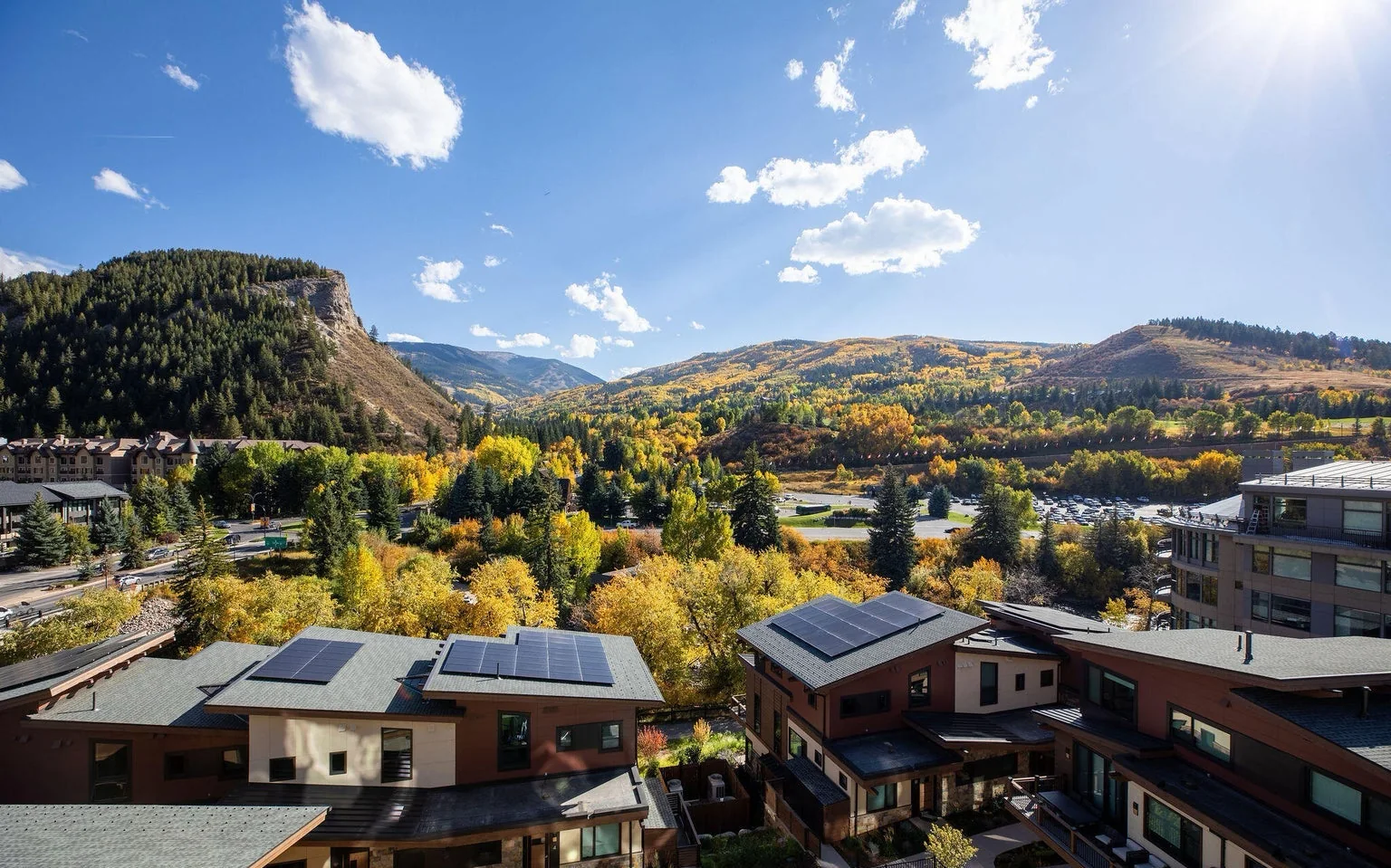
Most people meet the Vail Valley on vacation. You land at the airport in Gypsum, somebody drives you up I-70, and for a week the place behaves perfectly: blue sky, fresh corduroy, a table at the restaurant you wanted. Living here full-time is a different negotiation, and it is one we have been having our whole lives. We were born in Eagle County. We have watched plenty of families make this move beautifully, and a few make it in a way that cost them an expensive year.
September is when the serious relocation conversations start. Families want to be in a house before the first storm, and sellers who have been sitting all summer are finally listening. If you are thinking about trading a vacation here for an address here, this is what we tell people before they start touring.
First decide which valley you are actually moving to
Newcomers say “Vail” the way people say “the Bay Area”, meaning roughly thirty miles of very different towns. Vail is walkable, iconic, and priced accordingly. Avon sits at the base of the Beaver Creek gondola and does real-life errands better than anywhere up-valley. Edwards has no lift and no village square and is where a large share of the valley actually lives. Keep going west and Eagle and Gypsum trade ski proximity for yard, garage, and newer construction.
The same budget produces radically different homes depending on where you point it, which we broke down in detail in Up-Valley or Down-Valley. For a full-time move the calculus shifts, though. A second-home buyer optimizes for the twelve weeks they are here. You are optimizing for 365 days, most of which involve groceries, school pickup, and a dentist.
Buy for the Tuesday in February, not the Saturday in July. The valley you live in is the one you drive in the dark.
The commute is part of the floor plan
Down-valley Gypsum: more house, more garage, more driving. For some families that trade is obvious, for others it is the thing they regret.
Everything here hangs off one interstate. When I-70 is clear the valley feels small. When it is snowing, or closed over Vail Pass, or backed up on a Sunday afternoon in March, twenty miles can take an hour. Before you fall for a house, drive the route from its driveway to wherever you will actually go every day, and do it on a weekday morning rather than a sunny Saturday.
Two practical notes. Winter tires matter more than the drivetrain badge on the tailgate, and Colorado’s traction rules on I-70 are enforced. And the valley has a real bus system running the length of the corridor, which changes the math on a second car and on how close to a stop you want to be. We walk clients through this when we tour, because a ten-minute difference in location is a daily tax or a daily gift.
Altitude, dry air, and the season nobody puts in the brochure
The valley floor drops noticeably from Vail down to Gypsum, and people who are altitude-sensitive often sleep better a few towns west. Give yourself a few weeks to adjust, drink more water than feels reasonable, and expect the dry air to be harder on you than the cold.
Then there is mud season, the shoulder weeks in spring and late fall when the lifts are down, the rivers are not ready, and a surprising number of restaurants simply close. Locals leave, or lean into the quiet. It is genuinely one of our favorite times of year and it is also the honest answer to “what is it like here when nothing is happening?” If a place only works for you in February and July, it is a vacation home, and that is a different conversation we are happy to have.
Schools, work, and what full-time actually costs
Eagle County has one public school district serving the whole valley plus a set of charter and private options, and families tend to choose a town around a school as much as around a house. Ask us which neighborhoods feed where before you narrow your search, not after.
On money, we would rather send you to live numbers than quote a figure that goes stale. The Eagle County market report shows current inventory, median pricing, and days on market, and the per-town reports like Edwards tell you how one community is behaving versus the county. Run a payment scenario through our mortgage calculator, then add the line items people forget: HOA dues, snow removal, higher insurance on some properties, and the cost of a shorter build season if you plan to renovate. If you are also selling elsewhere, our buyer guide covers how to sequence the two without owning nothing or owning two things.
Should you rent for a year first?
Sometimes, yes. If you have never lived through a winter here, or you are undecided between up-valley and down-valley, a lease buys you information that no amount of touring will. The honest counterweight is that long-term rentals in Eagle County are scarce and often seasonal, so “we will just rent” is easier to say than to execute. Buyers who already know the valley and know their town usually do better moving when they find the right house than waiting for a better moment that the inventory may not deliver.
Questions we hear every week
Do you need a four-wheel-drive vehicle to live in the Vail Valley?
Not strictly, but you need proper winter tires, and Colorado enforces traction requirements on I-70 during storms. Many locals drive all-wheel drive with snow tires. If your home is on a steep or unplowed private drive, four-wheel drive stops being optional. Ask about the driveway and who plows it before you write an offer.
Is it cheaper to live down-valley in Eagle or Gypsum?
Generally your money buys more square footage, newer construction, and an actual yard as you move west, which is why many full-time families land there. You trade drive time to the ski resorts for it. Compare the current per-town figures in the county market report rather than relying on a rule of thumb.
When is the best time of year to move to the Vail Valley?
Early fall is the sweet spot for buyers. Competition thins after summer, listings that sat all season become negotiable, and there is still time to close and move in before the first real storm. Spring works too, though inventory is typically tighter and sellers are aiming at the summer crowd.
Come see it in the off-season
The best thing you can do before moving here is visit when nothing is happening. Drive the commute, walk the neighborhood on a grey Tuesday, and see whether the place still feels right without the event calendar carrying it. We will give you the honest tour rather than the sales pitch, in English or Spanish. Start with our property search to see what is actually available, browse the ski guides if resort access is driving your decision (Vail, Beaver Creek), and then get in touch. We grew up in this valley. We would rather help you choose the right town than sell you the first house.
Casi todos conocen el Vail Valley de vacaciones. Uno aterriza en el aeropuerto de Gypsum, alguien lo lleva por la I-70 y durante una semana el lugar se porta perfecto: cielo azul, nieve recién peinada, mesa en el restaurante que querías. Vivir aquí de tiempo completo es otra negociación, y es una que nosotros venimos teniendo toda la vida. Nacimos en Eagle County. Hemos visto a muchas familias hacer esta mudanza muy bien, y a algunas hacerla de una forma que les costó un año caro.
Septiembre es cuando empiezan las conversaciones serias de reubicación. Las familias quieren estar en su casa antes de la primera tormenta, y los vendedores que pasaron todo el verano esperando por fin escuchan. Si estás pensando en cambiar unas vacaciones aquí por una dirección aquí, esto es lo que le decimos a la gente antes de empezar a ver casas.
Primero define a cuál valle te estás mudando
Los recién llegados dicen “Vail” como quien dice “el área de la bahía”, refiriéndose a unos cincuenta kilómetros de pueblos muy distintos entre sí. Vail es caminable, icónico y con precios acordes. Avon está a los pies de la góndola de Beaver Creek y resuelve los mandados de la vida diaria mejor que cualquier lugar arriba del valle. Edwards no tiene telesilla ni plaza de pueblo, y es donde vive buena parte del valle. Más al oeste, Eagle y Gypsum cambian cercanía a la nieve por jardín, cochera y construcción más nueva.
El mismo presupuesto produce casas radicalmente distintas según hacia dónde lo apuntes, algo que desglosamos en Up-Valley o Down-Valley. Para una mudanza de tiempo completo, sin embargo, el cálculo cambia. Quien compra una segunda casa optimiza para las doce semanas que estará aquí. Tú estás optimizando para 365 días, la mayoría de los cuales incluyen el súper, la salida de la escuela y el dentista.
Compra pensando en el martes de febrero, no en el sábado de julio. El valle en el que vives es el que manejas de noche.
El trayecto diario es parte del plano de la casa
Gypsum, abajo del valle: más casa, más cochera, más carretera. Para algunas familias ese intercambio es obvio; para otras es justo lo que terminan lamentando.
Todo aquí cuelga de una sola carretera interestatal. Cuando la I-70 está despejada, el valle se siente pequeño. Cuando está nevando, o cerrada en Vail Pass, o saturada un domingo de marzo por la tarde, treinta kilómetros pueden tomar una hora. Antes de enamorarte de una casa, maneja la ruta desde su entrada hasta donde realmente vas a ir todos los días, y hazlo un día entre semana por la mañana, no un sábado soleado.
Dos notas prácticas. Las llantas de invierno importan más que el logotipo de tracción en la cajuela, y las reglas de tracción de Colorado en la I-70 sí se aplican. Además, el valle tiene un sistema de autobuses real que recorre todo el corredor, lo que cambia las cuentas sobre un segundo auto y sobre qué tan cerca de una parada quieres estar. Repasamos esto con nuestros clientes durante los recorridos, porque diez minutos de diferencia en ubicación son un impuesto diario o un regalo diario.
Altura, aire seco y la temporada que no sale en el folleto
El piso del valle baja de forma notable de Vail hacia Gypsum, y quienes son sensibles a la altura suelen dormir mejor unos pueblos más al oeste. Date unas semanas para adaptarte, toma más agua de la que te parezca razonable y espera que el aire seco te pegue más que el frío.
Luego viene la mud season, esas semanas de transición en primavera y a finales del otoño en las que los telesillas están parados, los ríos todavía no sirven y una cantidad sorprendente de restaurantes simplemente cierra. Los locales se van de viaje o se acomodan en la calma. A nosotros nos encanta esa época, y también es la respuesta honesta a la pregunta “¿cómo es esto cuando no está pasando nada?” Si un lugar solo te funciona en febrero y en julio, es una casa de vacaciones, y esa es otra conversación que con gusto tenemos.
Escuelas, trabajo y lo que de verdad cuesta vivir aquí
Eagle County tiene un solo distrito escolar público que atiende todo el valle, más opciones charter y privadas, y las familias suelen elegir pueblo alrededor de una escuela tanto como alrededor de una casa. Pregúntanos qué vecindarios corresponden a qué escuelas antes de acotar tu búsqueda, no después.
En cuanto a dinero, preferimos mandarte a datos en vivo que citarte una cifra que se va a quedar vieja. El reporte del mercado de Eagle County muestra el inventario actual, el precio medio y los días en el mercado, y los reportes por pueblo como el de Edwards te dicen cómo se está comportando una comunidad frente al condado. Corre un escenario de pago en nuestra calculadora hipotecaria y luego suma los rubros que la gente olvida: cuotas de HOA, remoción de nieve, seguros más altos en ciertas propiedades y el costo de una temporada de construcción más corta si piensas remodelar. Si además vas a vender en otro lado, nuestra guía para compradores explica cómo ordenar las dos operaciones sin quedarte sin nada o con dos casas.
¿Conviene rentar un año primero?
A veces sí. Si nunca has pasado un invierno aquí, o si sigues indeciso entre arriba y abajo del valle, un contrato de renta te compra información que ningún recorrido te va a dar. El contrapeso honesto es que las rentas a largo plazo en Eagle County son escasas y muchas veces estacionales, así que “rentamos y ya” es más fácil de decir que de lograr. Los compradores que ya conocen el valle y ya saben en qué pueblo quieren estar suelen salir mejor mudándose cuando encuentran la casa correcta que esperando un momento mejor que quizá el inventario no les dé.
Preguntas que escuchamos cada semana
¿Necesitas una camioneta 4×4 para vivir en el Vail Valley?
Estrictamente no, pero sí necesitas buenas llantas de invierno, y Colorado aplica requisitos de tracción en la I-70 durante las tormentas. Muchos locales manejan vehículos de tracción integral con llantas de nieve. Si tu casa está en una entrada privada empinada o sin limpiar, la 4×4 deja de ser opcional. Pregunta quién quita la nieve antes de ofertar.
¿Es más barato vivir abajo del valle, en Eagle o Gypsum?
En general tu dinero alcanza para más metros cuadrados, construcción más nueva y un jardín real conforme avanzas al oeste, y por eso muchas familias de tiempo completo terminan ahí. A cambio, manejas más para llegar a los centros de esquí. Compara las cifras vigentes por pueblo en el reporte del condado en lugar de guiarte por reglas generales.
¿Cuál es la mejor época del año para mudarse al Vail Valley?
El inicio del otoño es el mejor momento para comprar. La competencia baja después del verano, las propiedades que pasaron toda la temporada en el mercado se vuelven negociables y todavía alcanza el tiempo para cerrar y mudarse antes de la primera tormenta fuerte. La primavera también funciona, aunque suele haber menos inventario y los vendedores apuntan al público del verano.
Ven a conocerlo en temporada baja
Lo mejor que puedes hacer antes de mudarte aquí es venir cuando no está pasando nada. Maneja la ruta diaria, camina el vecindario un martes gris y fíjate si el lugar te sigue gustando sin que el calendario de eventos lo sostenga. Te damos el recorrido honesto y no el discurso de venta, en inglés o en español. Empieza con nuestra búsqueda de propiedades para ver qué hay realmente disponible, revisa las guías de esquí si el acceso a la montaña es lo que decide tu compra (Vail, Beaver Creek) y luego escríbenos. Crecimos en este valle. Preferimos ayudarte a elegir el pueblo correcto que venderte la primera casa.
Mountain Views TeamBerkshire Hathaway HomeServices Colorado PropertiesLuis & Gerardo Avila — bilingual, born in the valley, and working in Eagle County real estate every day.Luis y Gerardo Avila — bilingües, nacidos en el valle y trabajando todos los días en bienes raíces de Eagle County.
Get new Eagle County listings by emailRecibe nuevas propiedades de Eagle County por correo
Be first to know when homes hit the market. No spam — just the valley, in your inbox.Entérate primero cuando salgan casas al mercado. Sin spam: solo el valle, en tu correo.
Make the Vail Valley homeHaz del Vail Valley tu hogar
Whether you're buying, selling, or just starting to dream, Mountain Views Team is here for the honest local conversation.Ya sea que compres, vendas o apenas empieces a soñar, Mountain Views Team está aquí para la conversación local honesta.
We use cookies to run the site, remember your language and search preferences, and understand traffic. You can accept all or keep only the essentials.Usamos cookies para operar el sitio, recordar tu idioma y preferencias de búsqueda, y entender el tráfico. Puedes aceptar todas o conservar solo las esenciales.Privacy PolicyPolítica de privacidad
Luis & Gerardo Avila — the real estate team across Eagle County, Colorado. Se habla español.Luis y Gerardo Avila — el equipo inmobiliario de todo el condado de Eagle, Colorado.